
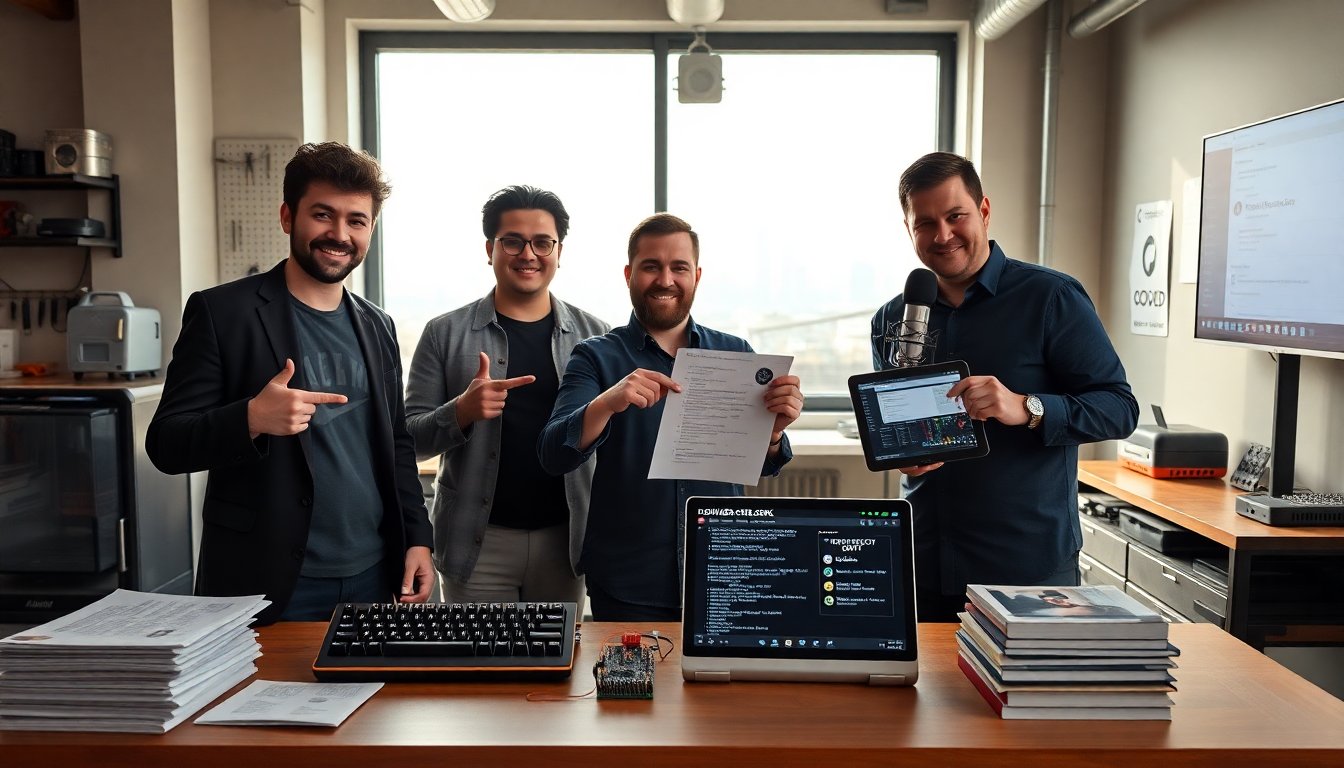
European tech stands out not only because of engineering skill but because so many different ways of thinking meet in the same product room. A team in Europe might include a backend developer from Poland, a product designer from Spain, a data specialist from Germany, and a project lead from Ukraine. That mix changes how products are discussed, tested, and improved. It brings more than variety for its own sake. It changes the questions people ask, the risks they notice, and the user habits they remember.
That is why, when buyers compare software development companies in Europe, they often find something more valuable than lower cost or convenient time zones. They find teams that are used to working across borders, across industries, and across very different customer expectations. In a region where one product may need to feel natural in Stockholm, Berlin, Milan, and Warsaw at the same time, diversity is not a side note. It is part of how strong products get built.

Different Backgrounds Lead to Better Product Decisions
Cultural diversity matters in tech because software is rarely just code. It is judgment. Teams decide what feels simple, what feels safe, what seems trustworthy, and what counts as good service. When people bring different social habits and work experiences into those decisions, weak ideas get challenged earlier. Therefore, teams often catch blind spots before users do.
This is one reason Europe keeps producing teams that think beyond a single market. A checkout flow that feels clear in one country may feel pushy in another. A healthcare app that seems friendly in one language may sound too casual in another. Diverse teams tend to notice those gaps faster, because someone at the table has seen a different version of normal before.
That also explains why many buyers do not look at software development companies only as vendors anymore. They look at them as thinking partners that can pressure-test product choices. Companies that grew in a part of Europe where this way of working is familiar, such as N-iX, typically collaborate with companies from other countries, so they get used to presenting ideas clearly, keeping decisions well documented, and thinking beyond a single market from the start.
Of course, diverse teams do not always move at top speed right away. More viewpoints usually mean more discussion. Still, that extra friction often pays off. Over time, it tends to produce better judgment, more thoughtful reviews, and stronger product decisions. The pattern is fairly consistent: when more perspectives are part of the conversation, teams make smarter calls and leave more room for fresh thinking.
How Diverse Teams Build Products That Feel More Natural
Europe’s advantage is not simply that it has many cultures. The real advantage is that tech teams there work with those differences every day. They do not treat them as a training topic. They treat them as part of delivery. Thus, cultural awareness shows up in product choices that users can actually feel.
For example, diverse teams are often better at spotting things like:
- Tone that sounds too direct or too vague for a local audience
- Visual choices that carry different meanings across countries
- Signup flows that clash with local trust habits or privacy concerns
- Support features that fit one market but confuse another
This becomes especially important in fintech, healthcare, education, and retail. In those areas, small details shape confidence. A software development company in Europe may need to build for several user groups at once, each with its own language habits, payment preferences, and legal standards. So teams learn to design with more care instead of treating one market as the default.
The effect reaches internal teamwork too. Good multicultural teams learn how to write clearer briefs, give more precise feedback, and explain assumptions instead of hiding them inside local references. In practice, that makes collaboration smoother. Studies on knowledge diversity suggest that varied knowledge bases, especially inside inclusive cultures, can improve collaborative innovation. And the idea of local cultural context shows why projects often succeed or fail on understanding, not only on technical skill.
Why Buyers Feel the Difference in Cross-Border Projects
The business side of this story is easy to see. European teams are often asked to build products that move across borders from day one. A startup in Amsterdam may target customers in France and Italy. A logistics platform in Central Europe may serve partners in five countries. A SaaS tool built in the Baltics may sell to the UK, the Nordics, and North America. Because of that, teams learn to build with variation in mind.
This is where cultural diversity stops being a nice talking point and becomes a product habit. Teams ask better questions about wording, onboarding, support, compliance, and user expectations. They also tend to be less shocked by disagreement because different working styles are already part of the daily rhythm. Moreover, that comfort with difference helps teams stay practical. They spend less time defending one “correct” way and more time comparing options that fit real users.
For buyers, that creates a useful filter. The strongest software development agencies do not just promise fast delivery. They show that they can understand context, adapt without drama, and keep quality steady across changing markets. This is also why many successful software development companies in the region win long partnerships instead of one-off projects. They are not only writing features. They are helping products travel well.
Final Thoughts
Diversity alone is not a shortcut to better software. Teams still need trust, good leadership, and clear communication. Yet in Europe, diversity often grows alongside constant cross-border work, and that mix adds something valuable. It changes how teams talk through product choices, where they spot possible trouble, and how they improve ideas before release.
That is why European tech keeps attracting attention. Its strength is not just technical depth. It is the ability to bring different habits, assumptions, and user views into one build process without losing focus. In the end, that mix helps companies create products that feel more thoughtful, more adaptable, and more ready for real users in more than one market.